 The conservation strategy adopted by the Center for Biological Diversity revolves around bringing the courts to bear on the issues that seem to have been ignored and to put the feet of government agencies to the fire when it appears they are not fulfilling their responsibilities and obligations. It is a strategy that certainly keeps the Tucson, Arizona-based nationwide organization busy.
Turning attention towards the predicaments of cats in the United States (wild, not domesticated) and a few other animals, here's what Executive Director Kieran Suckling and his staff have been up to:
Historic Suits Defends 214 Rare Species From Pesticides
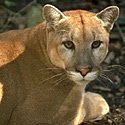 "In the most comprehensive legal action ever taken to protect wildlife from pesticides under the Endangered Species Act, the Center for Biological Diversity and Pesticide Action Network North America sued the Environmental Protection Agency today for failing to determine whether hundreds of approved pesticides harm already-imperiled species around the country.
The lawsuit names more than 200 species in 49 states -- from the Florida panther to the Chiricahua leopard frog to the Alabama sturgeon -- that wildlife officials and scientists say are threatened by pesticides. Our lawsuit challenges the EPA for not consulting with wildlife agencies before approving more than 300 pesticides. 'For decades, the EPA has turned a blind eye to the disastrous effects pesticides can have on some of America's rarest species,' said the Center's Jeff Miller."
Read more in a Center for Biological Diversity press release.
Lynx to Earn More Protected Habitat
 "The feds will likely protect more habitat for the stealthy Canada lynx, one of North America's most imperiled predators; the U.S. Fish and Wildlife Service has dropped its appeal of a federal court decision last summer that said the agency's 'critical habitat' designation for the lynx was too paltry.
Only about 1,000 Canada lynx remain in the United States, and about half of them are in Montana. After a lawsuit in 1994 by the Biodiversity Legal Foundation (now merged with the Center for Biological Diversity) and allies, the Fish and Wildlife Service in 2000 designated the spotted silver cat as 'threatened' under the Endangered Species Act. But even after a Center lawsuit overturning a previously inadequate critical habitat decision, the agency failed to base its designation on areas where lynx currently roam, leaving out habitat key for recovery (especially in Colorado). The latest development means the Fish and Wildlife Service will reevaluate how much critical habitat it will assign to this rare and mysterious forest cat."
Read more in the Helena Independent Record.
Suit Filed to Block Loan to Proposed Minnesota Mine
 "The Center for Biological Diversity and four partners on Tuesday sued Minnesota's Iron Range Resources Board over its $4 million loan to PolyMet Mining Company, which has proposed the state's first open-pit sulfide mine. The state agency's loan is premature and illegal under state law because the proposed mine is still going through the required environmental review process. The mine site is in the Superior National Forest, within the Lake Superior watershed.
PolyMet's proposed mine would destroy hundreds of acres of high-quality wetlands, violate water-quality standards for hundreds to thousands of years, and eliminate two square miles of protected 'critical habitat' for imperiled lynx and wolves. The draft environmental impact statement for the proposal was deemed "environmentally unsatisfactory-inadequate" by the EPA, triggering the need for a supplemental draft analysis that is still months from completion."
Read more in the Duluth News-Tribune.
The Center for Biological Diversity wants people to realize that the legal process can be a very productive tool in building conservation awareness. The latest edition of their newsletter, Endangered Earth, recaps many of their 2010 accomplishments and lays out the organization's objectives for 2011. You can download it by clicking here.
Here's some interesting news items from the Center of Biological Diversity (CBD). This group is making more and more of an impression in the state and federal political hallways because they are not afraid to go for the judiciary jugular when necessary and initiate legal action on behalf of endangered animals and ecosystems. And they get results!
U.S. Jaguar Court Hearing
 Exactly three weeks after the death of Macho B, the last known jaguar in the United States, this Monday a federal court heard oral arguments in the Center for Biological Diversity's bid to win a federal recovery plan and protected habitat areas for the endangered species. The hearing went very well. The judge peppered the government lawyer with difficult questions and clearly was skeptical of the agency's changing litany of arguments.
Though jaguars were declared endangered under the Endangered Species Act in 1997 -- thanks to another Center lawsuit -- the U.S. Fish and Wildlife Service has done nothing to recover the species or protect its habitat. In a cruel irony, the agency argues that it doesn't need to protect the jaguar because it's too endangered. That's right -- because the great cat's U.S. range has shrunk to near nothing, the agency argues it's too small to protect. Presumably, if the jaguar were less endangered, it would receive more protection?
Real Protection for False Killer Whale
 Seeking an end to the slaughter of false killer whales in Hawaii, last week the Center for Biological Diversity, Earthjustice, and allies sued the National Marine Fisheries Service over its failure to protect the rare marine mammal from the state's longline fishery. For nearly a decade, false killer whales -- actually large members of the dolphin family -- have been getting hooked and entangled by Hawaii's longline fleet, dying at rates far beyond what the population, which numbers at only about 500, can sustain. The Marine Mammal Protection Act requires the Fisheries Service to try to eliminate these deaths, yet even after a 2004 Earthjustice lawsuit by the Center and allies -- when the Hawaii-based fishery was ominously classified as "Category 1" due to its excessive killings of false killer whales -- the agency failed to act on the mammals' behalf.
San Francisco Bay-Delta Fish Protection
 While the state of California is moving (slowly) toward safeguarding two of the San Francisco Bay-Delta's most imperiled fish, the longfin and delta smelt, the U.S. Fish and Wildlife Service has stalled on responding to petitions for protection -- so this week, the Center for Biological Diversity and the Bay Institute filed a notice of intent to sue. In 2007, the Center and allies petitioned the federal government and California to protect the longfin smelt, but the Bush administration didn't make a decision on protection by its August deadline. Way back in 2006, the Center petitioned to upgrade the delta smelt's federal and state Endangered Species Act status from threatened to endangered -- but 23 months after a decision was due, the feds still haven't responded. Luckily, California has been a bit more proactive, designating both fish as candidates for greater protections. But meanwhile, thanks to degraded conditions in the Bay-Delta caused by water diversions, pollution, and introduced species, both the delta smelt and the Bay-Delta population of the longfin smelt are fading fast.
The "smeltdown in the Delta" -- as the extinction trajectory of Bay-Delta smelts is known -- is on fast-forward, but despite court orders to clean up their act, federal and state water agencies are still mismanaging California's largest and most important estuary.
And here's an odd one . . .
Bat Blasts Off as Space-shuttle Stowaway

 A small, daring free-tailed bat made one giant leap for batkind this month while clinging to the external fuel tank of the space shuttle Discovery -- and holding on for dear life even after liftoff. It's highly unlikely that the bat made it into space -- since the shuttle accelerates from zero to 100 miles per hour in 10 seconds after takeoff -- but in the photo of Discovery clearing the launch tower, the tiny creature is definitely visible on the side of the tank. Though the flight was probably fatal, the bat has made history and will live on in legend.
Unfortunately, even as we mourn the loss of the first "space bat," bats across the Northeast are experiencing an even scarier and not-at-all-entertaining demise thanks to the mysterious, deadly, and rapidly spreading bat disease known as white-nose syndrome. The Center is working to protect bats from all threats in the face of the devastating sickness, which just this month was confirmed to have spread to West Virginia.
You can learn more about these at the Center for Biological Diversity web site. Click here.
 The conservation strategy adopted by the Center for Biological Diversity revolves around bringing the courts to bear on the issues that seem to have been ignored and to put the feet of government agencies to the fire when it appears they are not fulfilling their responsibilities and obligations. It is a strategy that certainly keeps the Tucson, Arizona-based nationwide organization busy.
 "In the most comprehensive legal action ever taken to protect wildlife from pesticides under the Endangered Species Act, the Center for Biological Diversity and Pesticide Action Network North America sued the Environmental Protection Agency today for failing to determine whether hundreds of approved pesticides harm already-imperiled species around the country.
  "The feds will likely protect more habitat for the stealthy Canada lynx, one of North America's most imperiled predators; the U.S. Fish and Wildlife Service has dropped its appeal of a federal court decision last summer that said the agency's 'critical habitat' designation for the lynx was too paltry.
  "The Center for Biological Diversity and four partners on Tuesday sued Minnesota's Iron Range Resources Board over its $4 million loan to PolyMet Mining Company, which has proposed the state's first open-pit sulfide mine. The state agency's loan is premature and illegal under state law because the proposed mine is still going through the required environmental review process. The mine site is in the Superior National Forest, within the Lake Superior watershed.


