 The nation of Japan's cultural heritage behind seafood and its reliance on this natural resource to feed its people runs very, very deep. Combine that with the nationalistic pride that exists amongst the government and industrial institutions, along with the attitudes of a large segment of the population who know what it's like to be an island nation that has had to fend for itself for centuries, and it makes it easier to understand their intransigence when outside nations, particularly from the west, demand they change their ways for the sake of conservation of particular marine species.
Western civilization actually has a somewhat limited seafood menu pallet compared to Japan. What you'll find on the menu in a seafood restaurant on San Francisco's Fishermen's Wharf pales in comparison to what you'll find in a Japanese fish market. Historically, for Japan, marine species = seafood = survival. So, when strident conservation groups come in wagging a finger and demanding a complete cessation without any quid pro quo, based on a perceived higher moral authority on conservation grounds, the recalcitrance or outright defiance by the Japanese people should not necessarily come as any surprise.
An article that ran this past Friday in the Guardian, illustrated the industrial effectiveness of the harbor city of Kesennuma, Japan. In Kesennuma, shark fishing is a major activity, along with fishing for swordfish and tuna. The article highlighted not only the active commercial fishing taking place in this port city but also the protective attitude of the people in keeping their activities off the radar of prying western eyes.
Two leading pro-shark blogs, SharkDivers' and Da Shark, picked up on the story and wrote insightful posts, both noting the importance of viewing the situation from the other person's perspective, in this case, the Japanese. This is the essence of diplomacy: you can only attain your goals if you can show the other side that it is also in their best interests. And when the emotional furor of a conservation issue finally elevates itself to the international arena, then the game subtly shifts from conservation of a species (which still remains an underlying cause) to economic and cultural sustainability. This occurs whether it's a small Pacific island community or an industrial nation like Japan.
When I speak to U.S. audiences on shark conservation, I find that for the most part, the people I am speaking to have not had any shark products, except maybe for an occasional shark steak. They see the pictures of shark finning and are appalled, particularly when the fishermen dump the shark carcass overboard in favor of retaining only the fins. The audience's dander is now definitely up.
Then I ask them, "Have you ever toured a cattle processing plant? Or how about a poultry farm?" If they did, it wouldn't surprise me that it produces a few new vegetarians. Then, to put the cultural aspect in some sort of perspective, I ask them what their reaction would be if Mrs. Paul's brand of fish sticks were to change from cod to haddock. Typically, the reaction is one of "no big deal." Now, let's say instead, turkey is officially banned; no more big basted bird on the traditional Thanksgiving Day table. Their cultural heritage is now being infringed upon, and that's when they begin to get an idea as to the challenge before us.
Non-combative international diplomacy will continue to emphasize that conservation is in the best interests of Japan and all other Asian countries where seafood consumption has been a long-established foundation of their diets. Both sustainability of the species and their industrial economy will depend on long-term planning, initiated by some pressing and game-changing short term measures. Investing in improved, ecologically-sound aquaculture techniques could be the quid pro quo that could reinvent their commercial fishing industry before it collapses from a loss of species - a disastrous result which neither benefits mankind or the planet.
Read about Kesennuma in the Guardian.co.uk.
Read SharkDivers' post on the subject.
Read Da Shark's post on the subject.
 Today, we are experiencing a significant environmental and ecological movement, and well we should, as more and more evidence of our poor stewardship of earth's natural resources continues to mount. But for many movements there is a maturation process that is occurring where we are moving beyond building an emotional groundswell of awareness to realizing concrete, quantitative results. And that means developing successful strategies that can ward off intransigent corporate interests and get decision-makers to do what we elect them to do - to look out for the best interests of their constituencies.
While we look to others for tangible results, there are still personal decisions that we can make which can have an impact. Here are a couple that I came across.
Phosphate-Free Detergent
Ever wonder how your dishwasher gets your glasses sparkling free of spots? Phosphorus - one of those better-living-through-chemicals that binds to food particles and minerals, allowing dishes to rinse off free of residue. As much as a third of the phosphorus that makes its way as treated wastewater - which ends up in rivers and other waterways - comes from dishwasher detergent. The rest comes from fertilizers and our own body waste.
The problem with phosphorus is what it does in open water. It stimulates the growth of algae and this, in turn, impacts other aquatic life by either forcing them out in a territorial tug-of-war or by depleting the oxygen levels in the water - one component to the oxygen-free "dead zones" you may have read about.
Phosphorus detergents are slowly being phased out in many countries and U.S. states. But it has been a slow step-by-step process as chemical companies push hard to resist. By choosing to purchase phosphate-free detergent and living with a spot or two on your wine glasses, you are not only doing your part to protect the environment but you are telling the chemical companies, through the marketplace, how they need to adapt their business models to changing realities.
Plastic Bag Ban in Los Angeles County
In the United States, the groundswell toward banning the single-use plastic bag is in its infancy but slowly making progress. The Los Angeles Board of Supervisors has initiated a plastic bag ban in unincorporated areas under its control which should produce an annual reduction of 600 million bags.
 Several other cities have tried for bans and seen them defeated due to the concerted efforts of plastic bag lobbyists, so plastic bag ban supporters learned from those mistakes and focused less on the big picture issues of greenhouse gases and ocean pollution/biodegradability associated with plastic bags. Instead, they built convincing arguments regarding local pollution/litter, contaminant-free reusable bags, the failure of plastic bag recycling programs, and the right of stores to charge customers a modest 10-cents for recycled paper bags.
As these represent the efforts of environmental organizations and politicians, what should be our personal contribution? Support. At the very least, ask for paper bags instead of plastic when you go to the market. Use reusable cloth bags when you can (make sure they can be easily washed or disinfected). Keep one in your car for those unplanned runs to the store which often result in one more small plastic bag entering the environment.
But aren't single-use plastic bags convenient? Sure they are. However, it is a convenience that we are now seeing takes a heavy toll on the health and aesthetic appearance of the environment - from floating garbage patches at sea to roadside eyesores.
Favor Buying Farmed Fish
While international organizations work to limit the catches of dwindling species like tuna, swordfish, and many, many others, we can lend our support by buying farmed fish whenever we can. Commercial fishing, like many other industries, is slow, if not outright resistant, to the necessary transition from fishing to farming. The idea that a particular species will literally disappear does not resonate within the industry as well as changes in market demand does.
The logic behind aquafarming is simple, really. Imagine where we would be today if there was no cattle ranching or chicken farming - all beef and poultry came from what was caught right out of the forests and fields. What do you think those wilderness areas would look like today? Raising cattle and poultry was inevitable to meet the demand of a growing population. It wasn't without its problems or issues but it was better than a land devoid of animal life.
It's the same situation with seafood, with one crucial difference. That being, we can see what is happening on land but we don't see what is happening beneath the waves. And so, one after another, commercial aquatic species are facing literal extinction. Aquafarming is not without its problems. But if the market demand is there, the solutions will follow if for no other reason but to make it sustainably profitable. I hope to touch on some of those in future posts.
We turn to the policy- and decision-makers to take the steps necessary to secure a future for the planet and the generations that will inhabit it. But we must be prepared to show them that we can change our personal behaviors to fit a new appreciation of our limited resources.
Read about phosphorus in TIME.
Read about L.A. County's plastic bag ban at Heal The Bay
Seaweb.org recently released some interesting ocean conservation news - a bit of a mixed bag really.
The U.S. has been making some marked improvement in regulating the level of bycatch by commercial fishing operations. Bycatch is a critical issue in ocean conservation as it represents  millions of tons of wasted sealife, from the loss of marine mammals, sharks, and turtles in longline nets to the "scorched earth" effect exhibited in shrimp harvesting techniques. Through the application of four different regulatory laws or agencies (the Migratory Bird Treaty Act, the Marine Mammal Protection Act, the Magnuson-Stevens Fishery Conservation and Management Act, and the Endangered Species Act), the level of bycatch is being federally monitored and managed through the use of government observers.
One major issue though is the problem of having four different pieces of regulatory legislation, each with its own focus or emphasis on a particular situation or species. Involving this many cooks makes it difficult to get a more unifying and holistic approach to the entire issue. A recent report issued by Duke University's Marine Laboratory cited an approach by NOAA to establish a single set of regulations in 2006 for the Mid-Atlantic gillnet fisheries that proved to be a promising model and suggests that a review of existing regulations to develop a more cohesive strategy should be undertaken.
I had the opportunity to fly over the Northwest Passage in 2007 and see for myself the shrinking summer sea ice that had reached its lowest level in recorded history that year. As one could expect, there was a lot of alarming news coverage predicting an ice-free Northwest Passage within a few decades. Many computer models predicted the Arctic would lose its summer sea ice by 2080. But according to research by UCLA's Atmospheric and Oceanic Sciences Department, many of those models relied on ice data that reflected a gradual decline, but did not include the data from recent ice levels.
 With the growing awareness of the feedback effect of melting ice (exposing more heat-absorbing ocean to sunlight, thereby accelerating the melting process), the department's revised computer models move the clock forward by almost 20 years wherein we will be faced with an Arctic region devoid of most, if not all of its, summer sea ice - a monumental ringing of the alarm bell that global warming is now upon us.
Methylmercury - that dangerous party favor that lies within much of the seafood we consume - must share its host fish with the more beneficial omega-3 fatty acids. Can a risk/benefit analysis  determine which seafood would be more or less safe depending on species and frequency of consumption? This was the question that was studied recently and reported in Environmental Health Perspectives. The results of the study were not definitive but suggested that such a matrix could be developed. The report noted that farmed salmon, herring, and trout had a significant higher benefit vs. risk based on levels of methylmercury and omega-3 fatty acids. The opposite was true for swordfish and shark. Flounder and canned light tuna had a small benefit, while canned white tuna and halibut had a small risk.
While the elimination of all methylmercury should be our ongoing focus, such a risk/benefit analysis matrix would be helpful in dealing with current seafood stocks, since methylymercury is retained in the tissues and would be present in many species for some time in the future.
 I received an email today from the Humane Society to remind me that the clubbing of harp seals in Canada for the fashion fur industry still continues to this day. This was a hot button issue at one point in the past, with activist organizations like Greenpeace getting physically involved, and yet it has somewhat fallen off the radar - an unfortunate victim of too many issues and too short an attention span.
 Part of the Humane Society's strategy is to get a celebrity face involved, in this case, Cat Cora, executive chef for Bon Appetit magazine and founder of Chefs for Humanity - an excellent choice because of the Ms. Cora's and the Society's call to boycott Canadian seafood products as a form of protest.
How so? Because it represents a method for a broader audience to participate in and have a greater effect than if they chose not to purchase fashion fur. Face it, fashion fur appeals to a small, upscale market - a market, however, that is still fed by the loss of up to a million seals in the past four years. In contrast, Canadian seafood is consumed by a broader market and a successful boycott can send a stronger economic message.
And in the end, nothing legitimizes the opinions of the general public in the mind of commercial enterprise than when the bottom line is involved. To them, definitely money talks, bulls**t walks.
So, check out the Human Society's boycott campaign, include your voice if you feel it's right for you, and pass on consuming Canadian seafood as one way of showing that you care about issues, no matter how far past our intellectual expiration date they may be. Click here for more info.
 Besides being asked about mercury levels in seafood, which I touched on in a recent posting, I also get asked about which seafood to buy in restaurants or markets based on population of the species, healthy aquafarmed, etc. The Monterey Bay Aquarium has for many years provided terrific Seafood Watch pocket guides. These guides, which cover national and regional areas, can be printed and carried in your wallet or purse and are updated annually.
  It's a great way to have a quick reference to insure that your are making sensible choices in healthy seafood. I always carry a couple of guides in my wallet.
The Monterey Bay Aquarium has also released a new Sushi Guide and you can view all of the guides on your mobile device browser. Add http://www.seafoodwatch.org to your mobile device's browser list and you'll have the guides right there at the touch of a button.
The concept of "sustainable seafood" works only when we choice seafood that is aquafarmed or whose reproductive capability has not been negatively impacted by overfishing. The Seafood Watch Guides are a great way for all of us to make sensible choices regarding seafood.
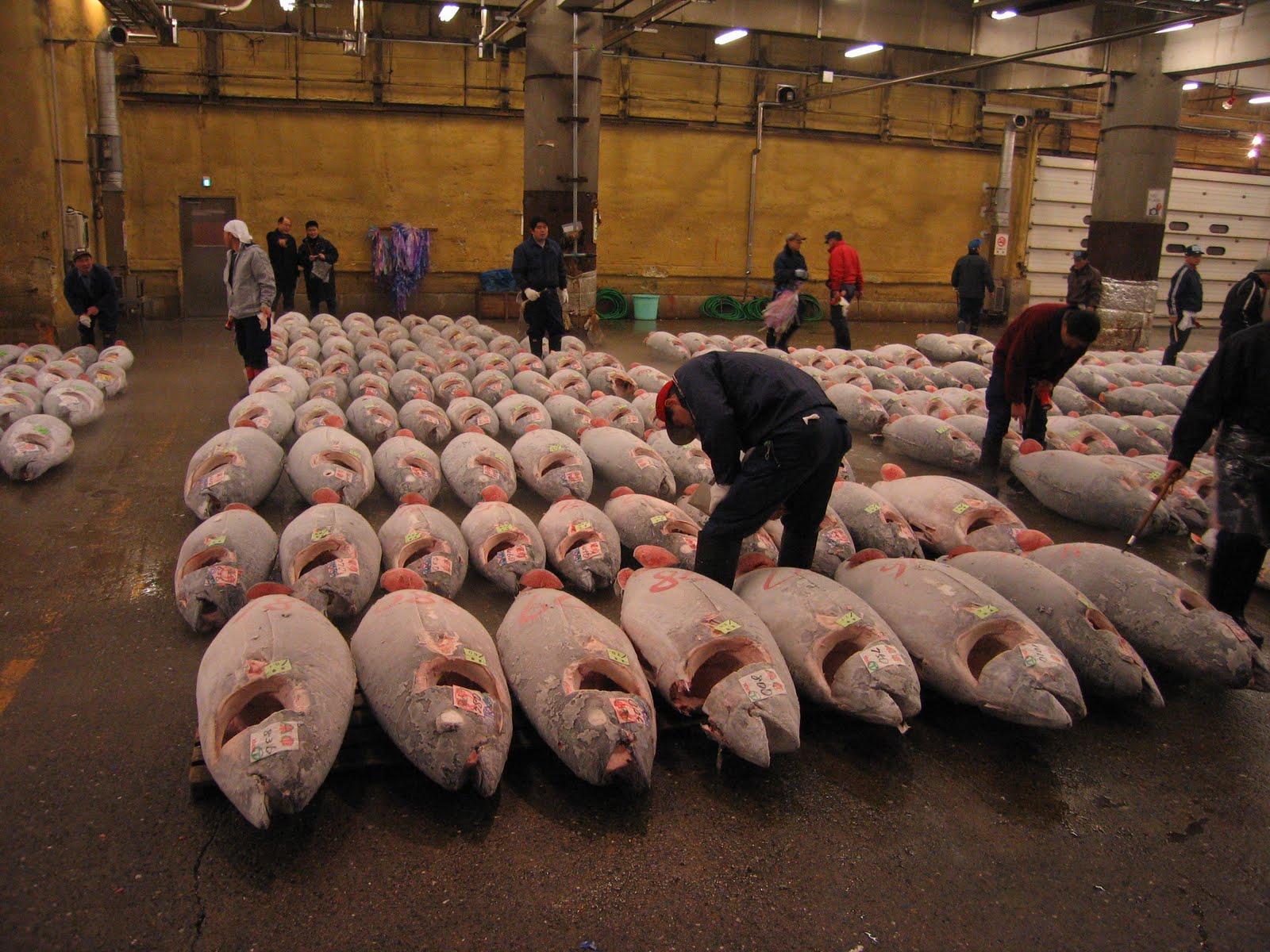 The nation of Japan's cultural heritage behind seafood and its reliance on this natural resource to feed its people runs very, very deep. Combine that with the nationalistic pride that exists amongst the government and industrial institutions, along with the attitudes of a large segment of the population who know what it's like to be an island nation that has had to fend for itself for centuries, and it makes it easier to understand their intransigence when outside nations, particularly from the west, demand they change their ways for the sake of conservation of particular marine species.


